
Introduction: The Unspoken Necessity of Constant Power
In the era of hyper-connectivity, our reliance on portable electronic devices—smartphones, cameras, tablets, and laptops—has become absolute, transforming them from mere conveniences into essential tools for navigation, communication, banking, and documentation while traveling. A dead battery is no longer a simple annoyance; it represents a complete breakdown of the traveler’s infrastructure, potentially leaving one stranded, lost, or cut off from critical information, particularly when traversing complex international borders or utilizing digital boarding passes. This dependence means that successfully executing a modern travel itinerary is inextricably linked to maintaining a reliable, continuous power supply across multiple devices and varying international electrical standards. Ignoring the critical aspects of power management is the single fastest way to invite unnecessary stress and logistical chaos into an otherwise perfect journey.
The challenge of powering your trip is two-fold: first, the need to physically connect devices to the wall socket using the correct universal adapters despite wildly inconsistent global plug designs; and second, the necessity of maintaining power integrity when far from any wall socket using efficient portable chargers and strategic battery management techniques. Simply relying on the hope that a location will have the right outlet or that a battery will last is a recipe for disaster. The savvy traveler must proactively plan and equip themselves with the correct gear and the behavioral wisdom to ensure their digital lifeline remains intact from departure to return.
Mastering this domain transforms the travel experience, allowing for worry-free exploration without the constant anxiety of a critically low battery notification. This extensive guide will dissect the essential strategies required for Powering Your Trip: Universal Adapters, Portable Chargers, and Battery Life Hacks, providing a comprehensive framework for achieving total electronic self-sufficiency abroad. We will meticulously cover everything from understanding voltage differences and selecting the right power bank capacity to mastering device settings that dramatically extend battery life in the field, ensuring you are always connected and always powered.
1. Navigating Global Power: Adapters and Converters
The world operates on a confusing array of plug shapes and voltage standards. Understanding the difference between an adapter and a converter is the first step in protecting your devices and safely drawing power.
The right equipment prevents your device from being fried or failing to charge.
A. The Adapter vs. Converter Distinction
Clearly understand The Adapter vs. Converter Distinction. A simple adapter only changes the shape of your plug to fit the foreign socket; it does nothing to alter the electrical current or voltage.
A converter or transformer is a more complex device that changes the voltage (e.g., from 220V down to 110V) for devices that cannot handle the higher current.







B. Checking Dual-Voltage Devices
Always Checking Dual-Voltage Devices before traveling. Most modern electronics (laptops, phone chargers, camera chargers) are dual-voltage, meaning they automatically accept both 110V and 220V power.
Look for text on the charger brick that reads “Input: 100-240V, 50/60 Hz,” which confirms compatibility, requiring only a simple plug adapter.
C. The Universal Adapter Necessity
Invest in The Universal Adapter Necessity. A high-quality, multi-plug universal adapter covers the four main plug types (A/B, C/F, G, I) and features built-in surge protection and multiple USB ports.
A single universal adapter is far more convenient and reliable than carrying a bag full of individual, single-country plugs.
D. Understanding Regional Voltage
Know and respect Understanding Regional Voltage. Using a 110V-only device (like an older hair dryer or shaver) in a 220V country without a converter will likely destroy the appliance.
Only use a converter for single-voltage appliances, never for your sensitive modern electronics which handle both automatically.
E. Multiple USB Port Advantage
Choose adapters that maximize the Multiple USB Port Advantage. An adapter with two or more built-in USB ports allows you to charge your phone and power bank simultaneously from a single wall socket.
This is critical in hotel rooms where available wall outlets are often scarce and inconveniently placed.
2. Portable Power: Selecting and Utilizing Power Banks
Portable power banks, or portable chargers, are the lifelines that keep devices functioning when wall sockets are unavailable. Choosing the right capacity and ensuring efficient use is key to self-sufficiency.
A power bank is your mobile insurance policy against dead batteries.
F. Calculating Capacity Needs (mAh)
Determine your needs by Calculating Capacity Needs (mAh). Look at your phone’s battery capacity (typically 3,000 to 5,000 mAh) and choose a power bank that offers at least two to three full charges (e.g., 10,000 to 20,000 mAh).
A 10,000 mAh power bank is a minimum requirement for a full day of independent travel.
G. Understanding Airline Restrictions
Be acutely aware of Understanding Airline Restrictions on power bank capacity. Most airlines require portable batteries over 100 watt-hours (Wh) or about 27,000 mAh to be approved, and all must be carried in carry-on luggage only.
Never pack lithium-ion batteries, including power banks, in checked baggage due to fire risk.
H. The Quick Charge Technology
Invest in The Quick Charge Technology (or Power Delivery – PD) in your power bank. Quick charge technology allows compatible devices to recharge at a much faster rate than standard charging ports.
Faster charging minimizes the downtime your device is tethered to the power bank.
I. Charging Discipline
Practice rigorous Charging Discipline. Always charge your portable charger overnight whenever you have access to a reliable wall socket, ensuring it is at 100% capacity before you leave your accommodation.
Never rely on topping up your power bank during the day when you should be relying on its full charge.
J. Utilizing Pass-Through Charging
Check for and utilize Utilizing Pass-Through Charging. This feature allows the power bank to be charged from the wall socket while simultaneously charging your phone, effectively turning the power bank into a charging hub.
This is a huge time-saver when access to outlets is limited to a single overnight period.
3. Battery Life Hacks: Optimizing Device Settings
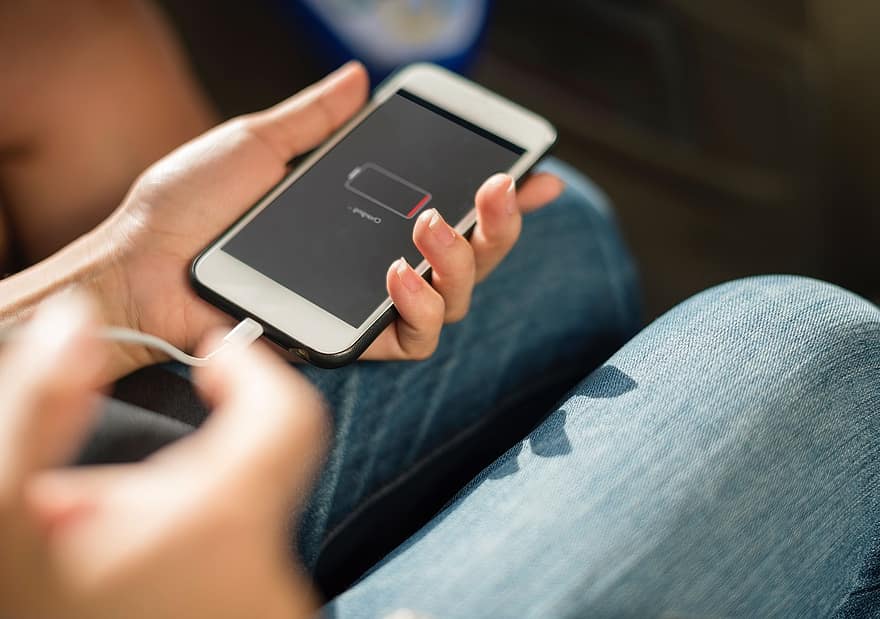
Extending the life of your device’s internal battery is the most immediate, cost-free power strategy. Simple adjustments to settings can dramatically reduce power consumption.
The best power management starts with conserving what you already have.
K. Aggressive Screen Brightness Reduction
Implement Aggressive Screen Brightness Reduction. The display is the single biggest drain on battery life; manually lower the brightness to the minimum comfortable level, especially when indoors or using the phone at night.
Avoid using automatic brightness settings, which often over-illuminate the screen.
L. Restricting Background App Refresh
Disable or Restricting Background App Refresh for non-essential applications. Many apps continue to fetch data, track location, and update content even when they are not actively in use, draining the battery unnecessarily.
Only allow critical communication and navigation apps to refresh in the background.
M. Enabling Low Power Mode
Routinely activate Enabling Low Power Mode or Battery Saver Mode, even when your battery is above the critical threshold. These modes restrict visual effects, automatic downloads, and CPU usage, significantly extending life.
These efficiency modes prioritize essential functions over non-critical performance elements.
N. The Wi-Fi and Bluetooth Toggle
Adopt The Wi-Fi and Bluetooth Toggle discipline. Turn off both Wi-Fi and Bluetooth completely when you are moving between locations or when you know you will not be connecting to a network or accessory.
Your device constantly searches for signals when these are left on, which rapidly consumes battery power.
O. Downloaded Content Priority
Prioritize Downloaded Content Priority. Download all maps, streaming media, and reading materials (books, guides) before you leave Wi-Fi, allowing you to access them without using battery-draining cellular data or continuous streaming.
Reading or watching downloaded content uses far less power than continuous loading via data.
4. Charging Strategy and Cable Management
The way you charge and transport your accessories matters. Smart cable management and prioritizing charging needs reduce clutter, prevents damage, and maximizes charging time.
A well-organized charging setup is the mark of an experienced traveler.
P. The Short Cable Advantage
Use The Short Cable Advantage for charging, opting for high-quality, durable cables (e.g., braided nylon) that are only 1-2 feet long. Short cables are less prone to tangling and wear, and are less likely to drag on dirty floors.
Always invest in certified, reputable cable brands to ensure full charging efficiency and safety.
Q. Prioritizing Charging Order
Establish a clear Prioritizing Charging Order. On low-power nights, always charge the most critical device (your phone, or the power bank) first, ensuring your primary communication tool is ready for the next day.
Charge secondary devices like cameras or tablets only after the essentials are secured at 100%.
R. Utilizing Airplane USB Ports
Be cautious but strategic about Utilizing Airplane USB Ports. While convenient, these ports often deliver inconsistent or low power. Use them primarily to slow the battery drain rather than to quickly charge a dead device.
Never plug directly into an unknown, unsecured public USB port (“juice jacking”) without a data-blocking adapter.
S. The Dedicated Tech Pouch
Organize all cables, adapters, and power banks into The Dedicated Tech Pouch or roll. This prevents them from becoming a tangled mess in your main luggage and ensures you know exactly where everything is at all times.
A dedicated pouch makes packing and unpacking your charging infrastructure simple and quick.
5. Alternative and Emergency Power Solutions
While primary strategies cover most situations, preparing for unexpected power loss or extreme circumstances requires knowledge of alternative, low-tech, and emergency charging methods.
Sometimes, the simplest solutions are the most effective when things go wrong.
T. The Power-Off Charge
When a device is critically low, perform The Power-Off Charge. Turning your device completely off while charging allows the battery to accept the current faster and more efficiently, bypassing the draw from the operating system.
This is the fastest way to gain emergency battery life from a short charge window.
U. Solar Charger Backup
For long-term, off-grid or remote travel, consider a Solar Charger Backup. Small, foldable solar panels are designed to slowly charge power banks or phones, providing a sustainable power source far from civilization.
Solar chargers require patience but are invaluable for multi-day trekking or camping.
V. Battery Swapping for Cameras
Maximize Battery Swapping for Cameras. Carry two or more fully charged, spare batteries for your camera. Swapping batteries is often faster and more efficient than using a wall socket to charge the battery while it’s in the camera body.
Keep spare batteries warm in an internal pocket, as cold weather drains them quickly.
W. Utilizing Laptop USB Ports
If all else fails, use Utilizing Laptop USB Ports as a temporary power source. A charged laptop can serve as a large, emergency power bank to top up a critically low phone or camera.
While slow, this is a clean, secure, and easily accessible source of backup power.
X. The “Do Not Disturb” Strategy
When power is extremely limited, enforce The “Do Not Disturb” Strategy. Put your phone in Airplane Mode and use it only for essential photos, quick map checks, and critical communications, conserving every last percentage point.
Turning off all non-essential functions ensures power is retained for true emergencies.
Conclusion: Total Electronic Self-Sufficiency
Achieving total electronic self-sufficiency while traveling is paramount, demanding that the modern explorer master the art of powering your trip through strategic preparation and disciplined execution. This journey begins with the essential investment in a high-quality universal adapter necessity and the critical habit of checking dual-voltage devices to ensure protection against electrical damage.
Portable reliability is guaranteed by accurately calculating capacity needs (mAh) for your power bank and strictly adhering to understanding airline restrictions for lithium-ion batteries. Ultimately, the longest power life is secured through conservation, by practicing aggressive screen brightness reductionand rigorously restricting background app refresh to conserve every precious percentage point of battery life.